
Rearing modern female breeding stock presents several challenging scenarios for farm managers, requiring them to act not just as passive observers, but as forward-thinking detectives searching for the root causes of flock issues. One critical strategy that is frequently overlooked on the field is maintaining appropriate feather cover and executing structured feather scoring protocols.
Feather cover is not merely an aesthetic attribute; it is a vital biological shield that safeguards the bird’s net energy budget, mating efficiency, and physical integrity. Inadequate feather cover triggers a cascade of negative effects: a decline in mating receptivity and fertility, loss of body weight, poor feed efficiency (FCR) due to the bird’s inability to properly thermoregulate, and severe physical injuries to the females.
How should feather cover be monitored across different age intervals, and how should scoring metrics direct rational field management decisions?
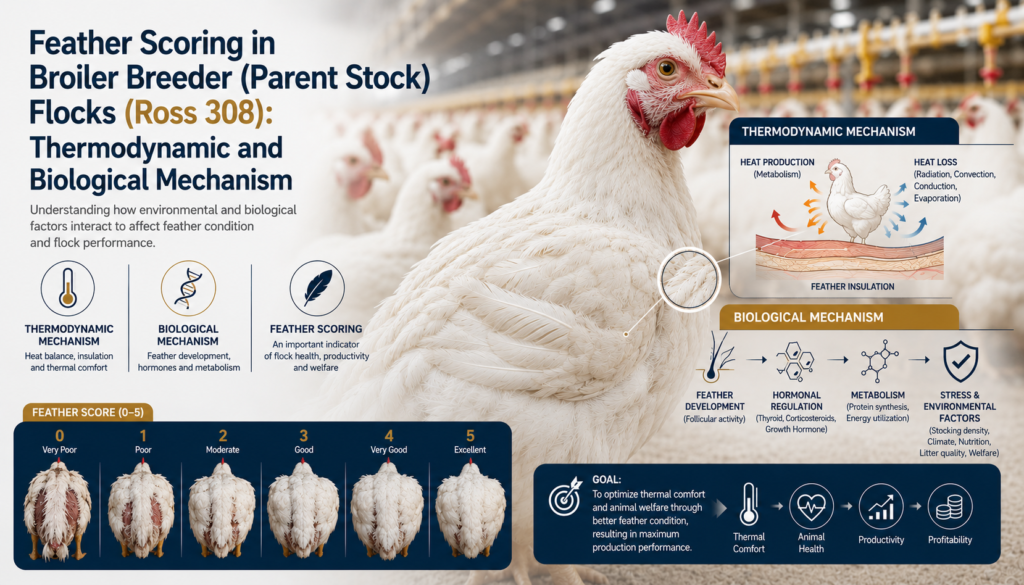
1. Rearing Phase: Feather Development and Critical Age Milestones
Chicks hatch with down feathers that are progressively molted as they grow. Feather coverage does not occur uniformly across all body regions simultaneously; the thigh area is one of the last areas to be fully covered.
Thigh feather coverage acts as a critical protective shield because it serves as the primary point of contact and friction between birds at feeding time. If the thighs lack adequate feather protection, pullets become highly susceptible to skin lesions, which directly reduces their longevity in production. The objective is to achieve %>95 thigh feather coverage before light stimulation (Week 21 / Day 147).
According to Aviagen standards, the chronological targets for thigh feather coverage in breeding females during rear are as follows:
- Week 12 (Day 84): Feather coverage should reach
%>55. - Week 16 (Day 112): Feather coverage should reach
%>70. - Week 20 (Day 140): Target before light stimulation is
%>95coverage.
To optimize feather development during rear, gradually reducing the ambient house temperature to 20°C by 28 days (4 weeks) of age ensures that pullets remain within their thermoneutral zone, utilizing metabolic energy for growth and feather tissue synthesis rather than thermoregulation. Furthermore, eliminating overcrowding risks by providing uniform, calm access to the entire floor area, feeder tracks, and drinker lines no later than 28 days of age is the fundamental way to prevent mechanical feather breakage.
2. Production Phase: Feather Wear and the Mathematical Correlation to Fertility
Following photostimulation (Week 21), minimal feather growth or regeneration occurs because the hen’s neuroendocrine response is entirely geared toward reproduction and egg mass output. Beyond this point, the operational objective shifts completely toward conserving the existing feather cover.
During production, the primary cause of mechanical feather loss is physical interaction with males during mating. A common, subjective misconception within the poultry industry states: “The hens with the most severe back feather wear are mating most frequently and are therefore the most fertile.”
However, controlled field data and scientific studies demonstrate the exact opposite. Females exhibiting extensive dorsal (back) feather loss suffer direct trauma from male claws and spurs during treading. Because of this physical pain, these hens become far less receptive to males, actively avoiding mating attempts. This behavior reduces mating frequency across the flock, mathematically driving down overall fertility rates. Uniform flocks that maintain optimal standard feather cover are more receptive and exhibit superior fertility parameters.
3. Numerical Feather Scoring Metrics: Data-Driven Flock Analysis
Subjectively grading a flock’s feathering condition as simply “good” or “bad” yields unreliable data. To execute precise management choices, farm managers must apply a standardized numerical scale ranging from 0 to 5:
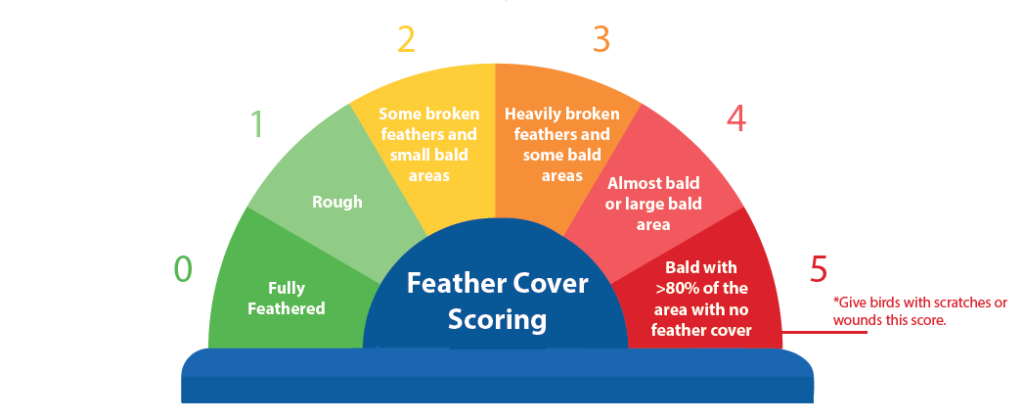
- Score 0: Fully Feathered (Pristine feather cover).
- Score 1: Rough (Slightly damaged, matte, or broken feathers).
- Score 2: Some broken feathers and small bald areas.
- Score 3: Heavily broken feathers and some bald areas.
- Score 4: Almost bald or large bald areas (More than 80% of the zone lacking cover).
- Score 5: Severe scratches or open wounds (Pençe lezyonları) -> Immediate Veterinary Intervention Required!
Application Protocol: Flocks should be evaluated every 4 weeks during rear (specifically at 12, 16, and 20 weeks of age) and every 10 weeks during production after peak lay (at 25, 30, 40, 50, and 60 weeks). The back, thighs, wings, and tail areas must be scored independently.
Veterinary Note: Around 40 weeks of age, hens may initiate a natural physiological molt. Feathers dropped during this specific period should not be counted as management-induced loss and these birds must be excluded from the standard flock scoring average.
4. Root Causes of Excessive Feather Loss and Multidisciplinary Solutions
When flock feather scores drop below standard targets (e.g., an accumulation of Score 3 and 4 at week 30), both mechanical control loops and nutritional specs must be audited:
- Over-Mating and Male Ratios: Mating ratios must be dynamically downscaled as the flock ages to avoid excessive hen wear (e.g., maintaining 9.50–10.00% high-quality males at day 154, but reducing this to 6.50–7.00% past week 50). Additionally, a lack of sexual synchronization between males and females at mating-up causes aggressive interactions that destroy female plumage.
- Feed Physical Form and Fines Accumulation: Poor pellet or crumble durability indexes (PDI) lead to a build-up of fine particles inside the feeding system. Pullets struggling to consume these fine dust layers experience nutritional shortfalls and stress, which triggers severe feather pecking outbreaks.
- Nutritional Imbalances (Sulfur Amino Acids & Crude Fiber): Feathers are predominantly composed of keratin. A deficiency in key sulfur amino acids, specifically Methionine and Cystine, renders the feather shaft brittle and prone to shattering. Furthermore, if dietary crude fiber drops below the recommended 3% to 7% benchmark, hens develop a physiological craving for fiber, leading to feather eating and cannibalistic behaviors. Trace mineral deficiencies (Zinc and Selenium) also impair feather follicle development.
- Enteric and Parasitic Pathogens: Subclinical challenges like Coccidiosis or Necrotic Enteritis damage intestinal villi, severely limiting the absorption of amino acids required for feather integrity. External ectoparasites (Mite infestations) cause intense cutaneous irritation, accelerating self-plucking and mechanical wear.
Field Methodology: How It Is Done on the Farm
To collect unbiased empirical data, birds are randomly sampled from high-density zones within the house without subjective selection. Individual body weights are recorded, and the wings, back, tail, and thighs are systematically inspected. A quantitative score is assigned to each zone based on feather density and architectural status.
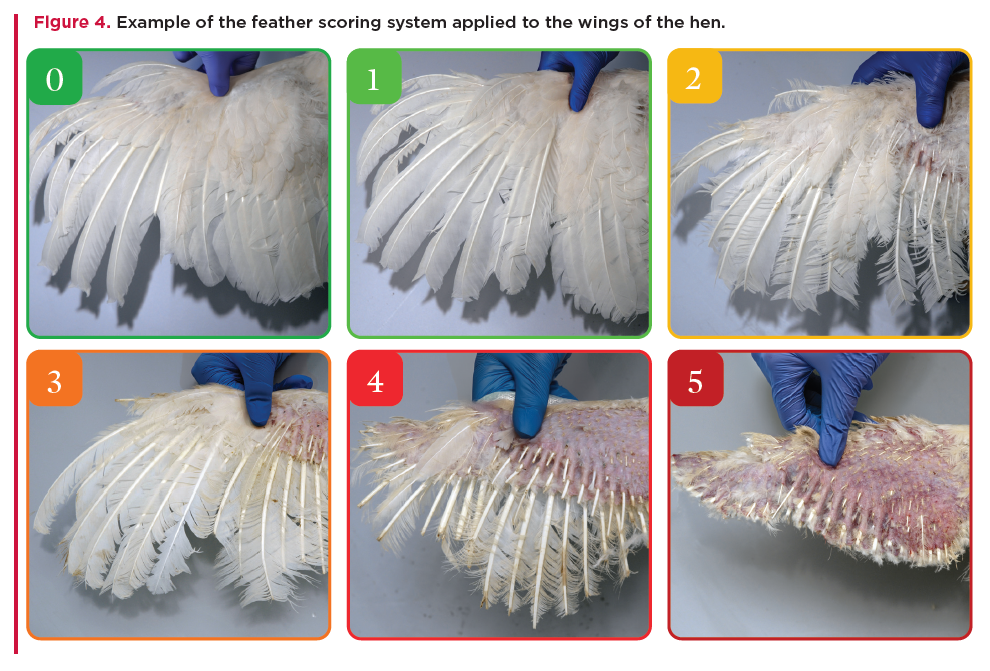
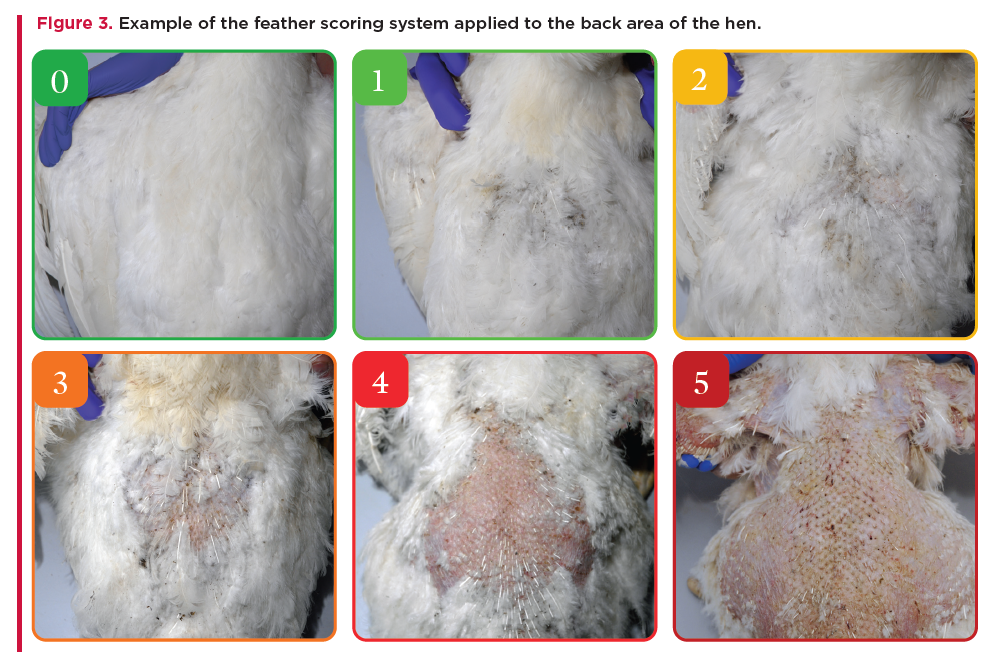
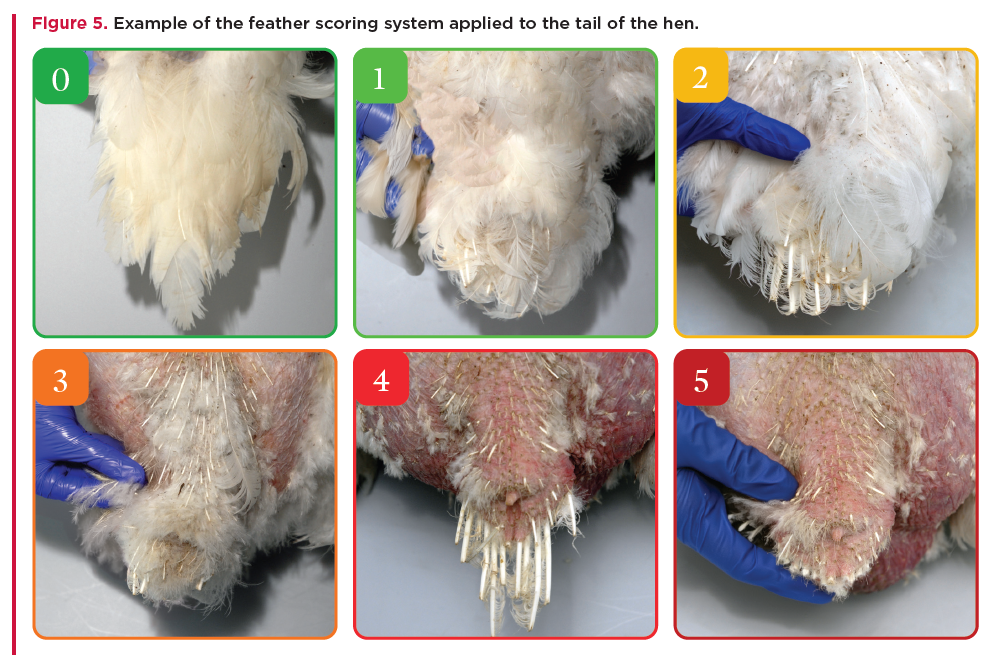
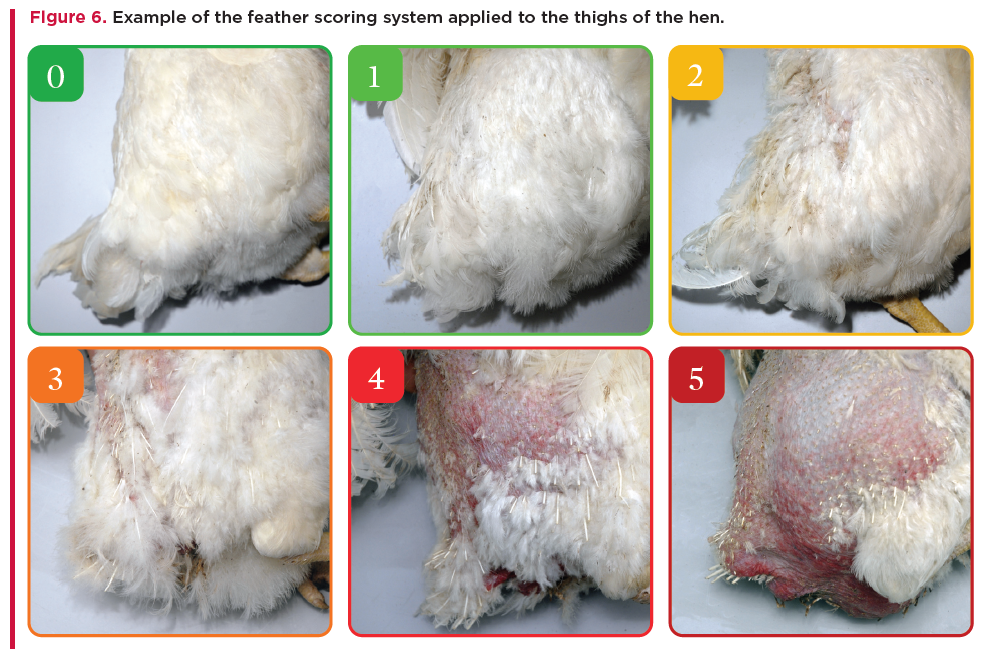
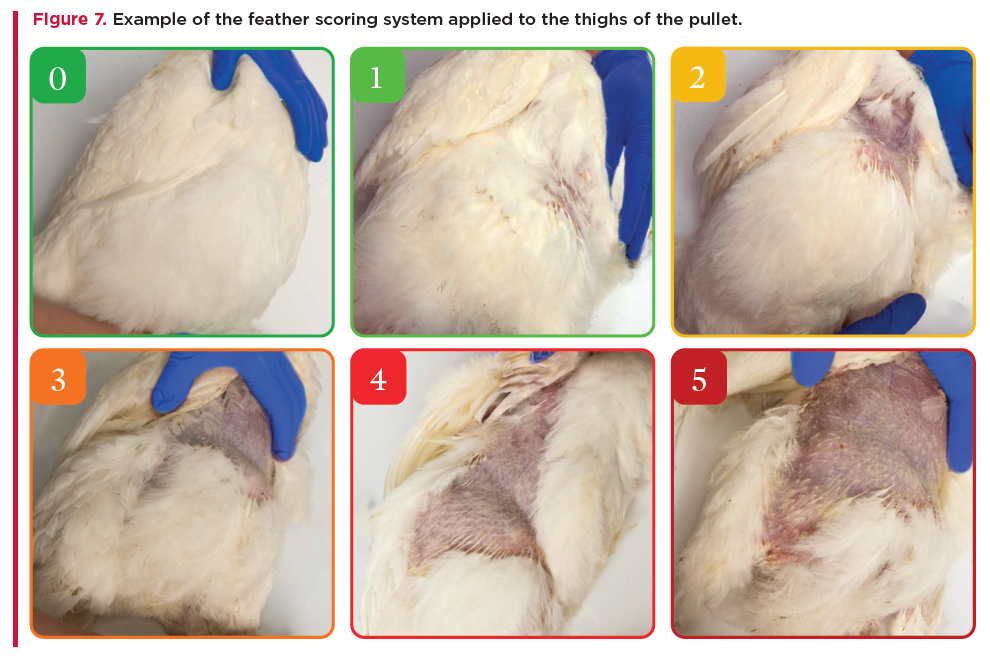
As an operational example of this protocol applied to a commercial Ross 308 flock, look at the actual field feather scoring reports extracted at Day 363 and Day 448:
- Flock Feather Scoring Report (Day 363):
- Flock Feather Scoring Report (Day 448):
Summary and Sectoral Impact
In industrial parent stock management, feather cover acts as a living barcode reflecting the flock’s underlying health, nutritional balance, and administrative quality. Once extreme feather loss manifests in breeding stock past 35 weeks of age, the damage is mathematically irreversible within the house. Long-term success relies on tracking feather scores as digital assets from day one, ensuring rapid feed distribution (completed under 3 minutes system-wide), and managing male-to-female ratios with absolute technical precision.
References:
1. Halley, N., & Caldas, J. (2024). A Practical Guide to Managing Feather Cover in Breeding Stock Females. Aviagen Brief.

2. Kretzschmar-McCluskey, V., Fisher, C., & Van Tuijl, O. (2014). Managing Feather Cover in Broiler Breeders. Aviagen Technical Articles.

3. Skinner-Noble, J. A., & Teeter, R. G. (2009). Environmental and management factors affecting feather score and subsequent fertility in broiler breeder flocks. Poultry Science, 88(4), 890-898.